
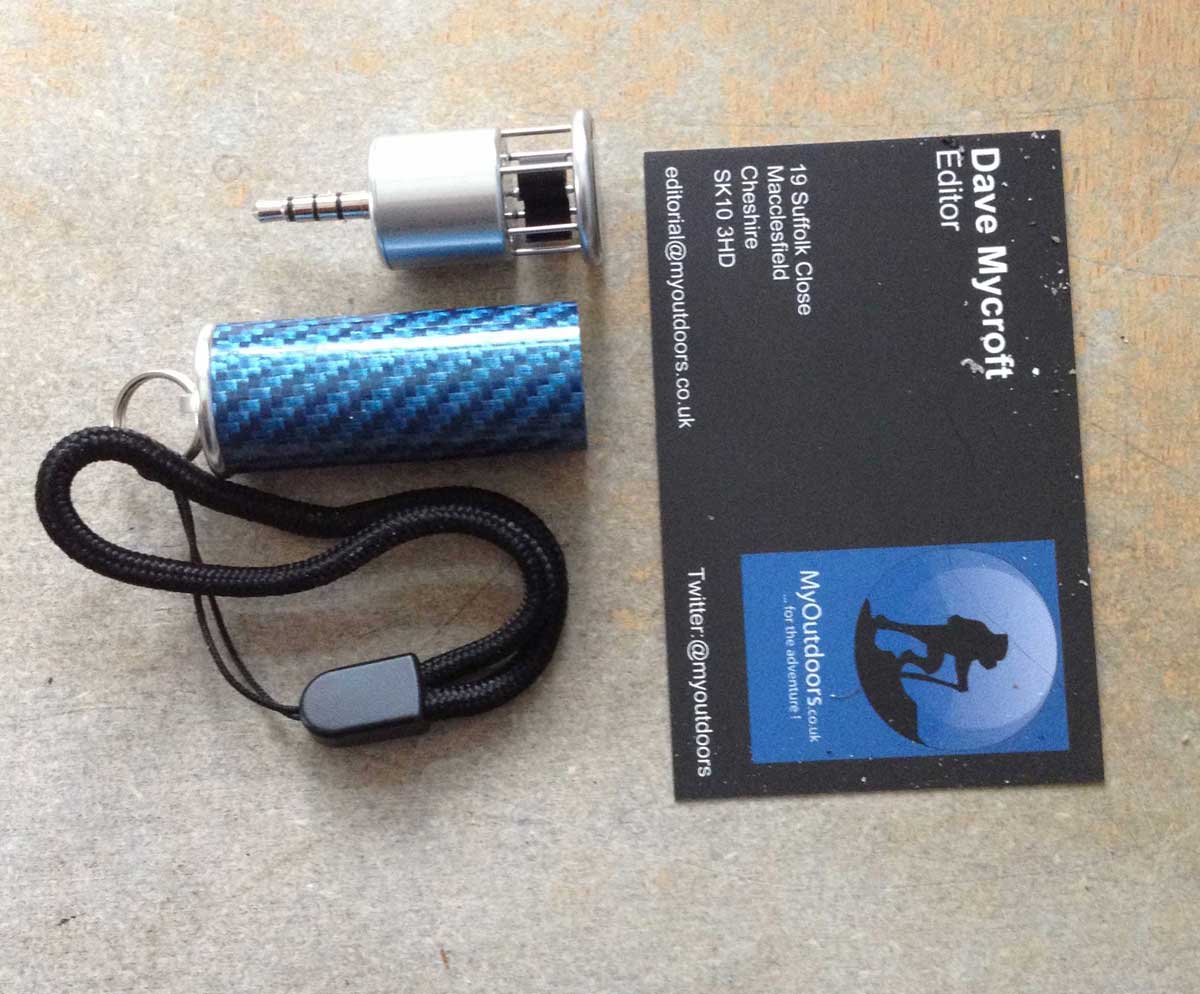
The first thing you need to know about the Windoo 3 is that on its own it's useless. Without a compatible smartphone and app it's just an expensive keyring but plug it into your app-enabled phone and it's a fully functional mini weather station and fortunately it works with both Apple and Android based phones (iOS 6 or above, Android Ice Cream Sandwich 4.0 or above). The app is free to download on both platforms and we tested it using an iPhone 4S running iOS8.
Opening the blister pack containing the Windoo you get a carbon fibre and aluminium cylinder containing the sensor mechanism and a lanyard with a combined weight of 20.7g. The Windoo itself is a snug, but smooth fit, and simply pulls out from its protective housing to reveal a stainless steel shaft and anodised sensor housing. Turn your smartphone app on, plug the Windoo jack into the headphone socket and turn the volume to maximum and the Window will immediately activate.
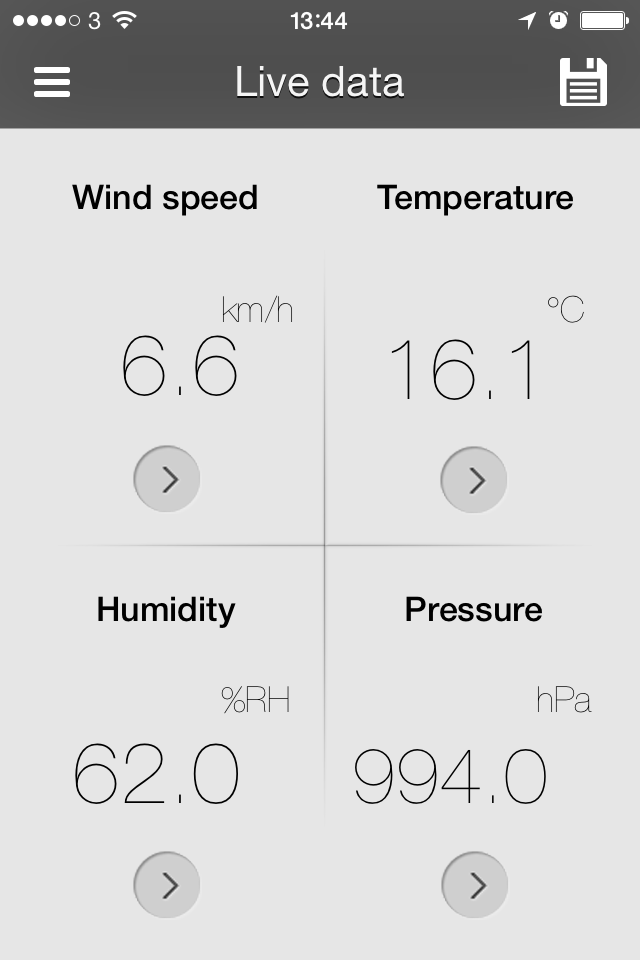
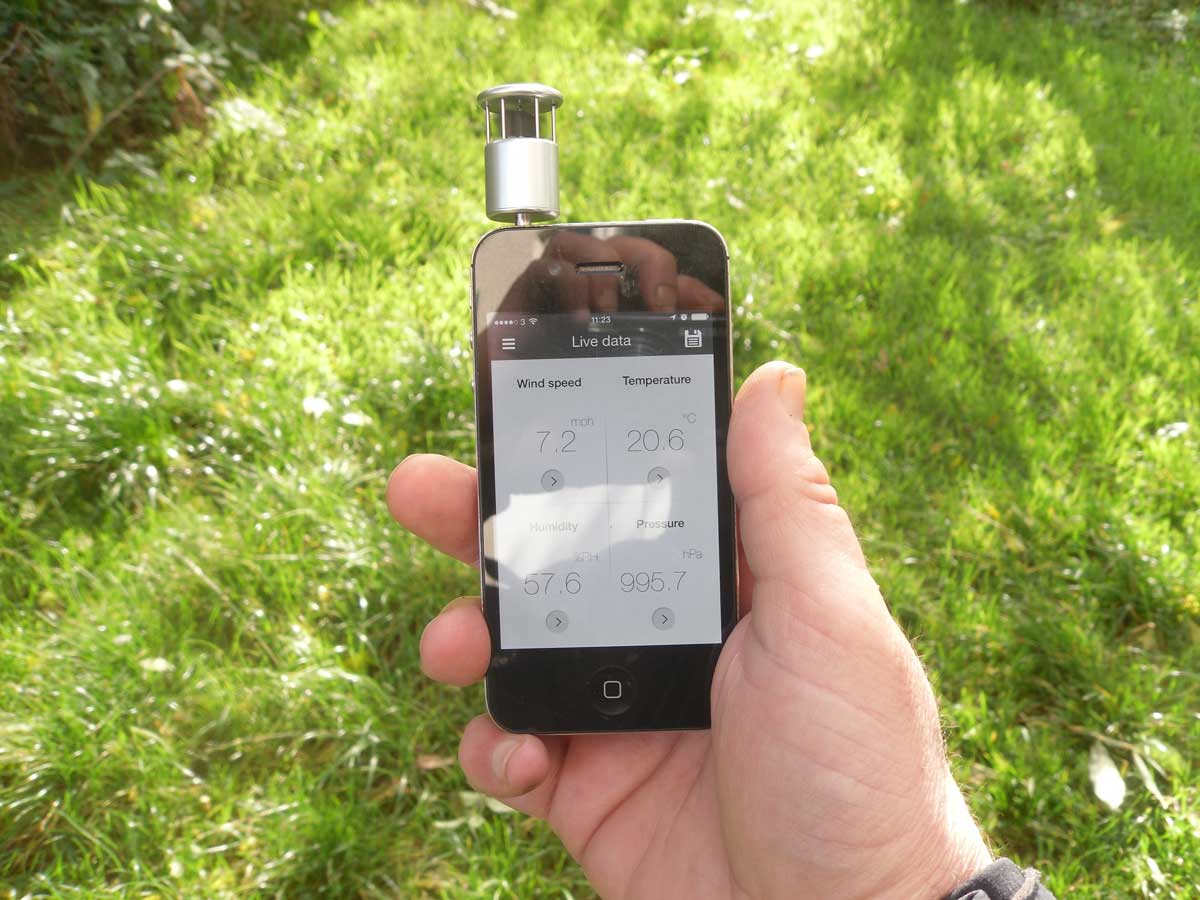
Live Screen
The Windoo protrudes from your smartphone by around 3cm and outside its protective case weighs in at just 8.6g. On startup the app takes a couple of seconds to self calbrate the sensors then starts displaying results on the "Live" page. Tapping the icon on the top left of the screen allows you access to History , Map and Settings Menus with the icon top right used for data saving.
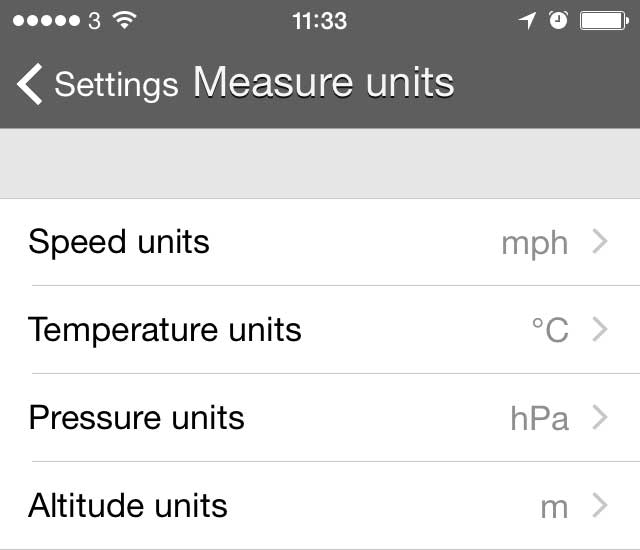
Set your measurement units and you're ready to go
With the Windoo 3 you get 4 sets of measurements on-screen; Windspeed which is refreshed once per second, and Temperature, Humidity and Pressure which are refreshed every 3 seconds.
Specifications
| Min. | Max. | Accuracy | Resolution | Units | |
|---|---|---|---|---|---|
| Wind | 1.8 mph | 93.2 mph | ± 2% | ± 0.1 mph | km/h, m/s, fps, mph, knots, Bft |
| Temperature | -25 °C | 60 °C | ± 0.3 °C | ± 0.1 °C | °C, °F |
| Humidity | 0 %RH | 100 %RH | ± 4.5 %RH | ± 0.1 %RH | %RH |
| Pressure | 300 hPa | 1100 hPa | ± 0.2 hPa | ± 0.1 hPa | hPa, mbar, inHg |
Below each measument an arrow gives access to further data including minimum and maximum readings and averages. The wind speed screen gives direction information both as an icon and a specific direction in degrees while the Temperature screen gives a WCT, or Wind Chill Temperature, reading in addition to Min, Max and Avg. With the Humidity screen you get the addition of a Dew Point reading and the Pressure screen gives a reading called QNH which displays the barometric pressure adjusted to sea level with the altitude given by the smartphone's GPS.
The number of ways in which this information can be useful in the field is amazing, with climbers interested in humidity levels, mountaineers checking the pressure for oncoming fronts and the backpacker helped by both the wind speed and temperature readings. Live data, however, only tells you what you're already experiencing but the ability to record and share the data can show trends that can help predict the weather. Clicking the top right icon on the screen will allow you to both record the data to your phone, with an option to photograph the location, and share it with Windoo users and/or social media. Used over a period this historical data can show falling or rising pressure patterns which indicate oncoming fronts, alerting both the user and followers on social media of weather changes.
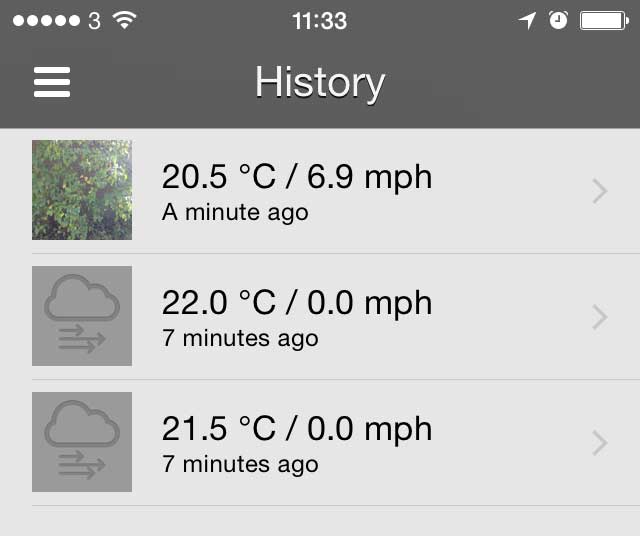
Historical data can be quickly accessed
After a few weeks of use the Windoo 3 has become a permanet attachment to my keyring. To date we haven't been able to figure out the Facebook and Twitter settings and the Windoo server has been inaccessible for sharing online but all the practical features work perfectly. It can take a few seconds for the sensor to settle down when moving from indoors to outdoors and vice versa with dramatic temperature changes but it handles the more subtle outdoor changes seamlessly and the wind speed is sampled more often than temp, humidity and pressure. It may be small and light but it's a quality piece of engineering from a company with a distinguished history and it feels like it'll last for years. If there's a practical issue it lies in the fact that in the worst weather you'll need a waterproof housing for your phone which still allows connection through the headphone socket, but this is more a smartphone issue than a Windoo one.
The £100 price tag may put a few people off but the deeper you dig into the features the more you see why the price tag is justified. For those who only need the wind and temperature data the 1 is expected to be around the £40 mark with the Windoo 2, including humidity, around £65. Given the size and weight compared to the alternatives and the ability to record data we wouldn't hesitate to recommend a Windoo, it's 20.7 g you won't reget carrying.